![[SPI:K] Logo](https://spi-k.com/wp-content/uploads/header-logo-50h.png)
Why resources are key to success and what to do next?

Don’t feel frustrated! Here are resources to help you!
This document emphasizes why resources are critical to success: in order to progress, you need the right skills AND the right environment to practice in, from the start.
The linked activity page recommends valuable sites which you can use from beginner level all the way to near native speaker.
Are you following an efficient pathway?

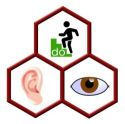
SPI-K provides a three step approach which every student needs to put in place – in the RIGHT order – to advance at speed and naturally.
Fortunately, remembering it is straight-forward as it mirrors children’s learning: first, engaging, second, listening as well as speaking back, and third reading and writing.
By contrast, grasping its logic takes time. It requires insights gained through results and this calls for practice.
Please come back to these lines regularly until they make total sense to you and guide you through an easy learning AND immediate results’ pathway.
Please make sure you take the time to rehearse the steps below in order to trigger Eureka moments and build habits before believing that you know them.
- 1/ Engagement comes first.
- 2/ Listening and speaking happen second.
- 3/ Reading and writing take place third.
These steps are organized the opposite way to what most learners do. A key reason for your future enhanced success is this inversion of activities back to the natural way children learn.
Stage 1: Engagement comes first.
By “engagement”, we mean focusing first on activating what we learn from day 1. Once we use words in real life, we get to test them, practice them, adjust them, digest them and progress truly as a result. What delivers actual learning IS our interaction with real people. Waiting to speak well enough (even worse: perfectly) to engage is probably the most common and fundamental error learners make. By “engagement”, we mean focusing first on activating what we learn from day 1. Once we use words in real life, we get to test them, practice them, adjust them, digest them and progress truly as a result. What delivers actual learning IS our interaction with real people. This is achieved through partaking in genuine conversations. Waiting to speak well enough (even worse: perfectly) to engage is probably the most common and fundamental error learners make.
Words that you say in real conversations, and regularly, are easily assimilated. They then become readily accessible and available in your next discussions. To start with, you only need a few words and sentences which ‘they’ can understand’. These form the roots that you then build upon. It is thanks to this critical step, that words which you discover in step 2 and 3 are used and activated in communication. To perform at step 1, you need a network from very early on. One of the first persons in it may be your trainer.
However, very soon you need new contacts, then a network that you patiently grow and nurture over time, the higher your level, the larger your expected network. For total beginners, this step includes – as a resource – accessing high quality audio material to practice your first words and phrases at the same time as you attempt to use them live in basic – for example ‘greetings’ – communication.
Step 1 sets the foundations for the language mindset, the skills and “space” for more new words to come in, which is step 2.

Step 2: Listening and speaking happen second.
From your first conversations all the way to the highest level, you continuously need more words available for use. In fact, the quality of your speaking defines your true ability to communicate. Therefore, the way to fuel your development is through selecting carefully the next wave of words you want to activate in step 1. At first, don’t be too greedy! When it comes to improving your speaking, learn to become highly selective and ruthlessly focus on core words you want for the next level in real life. Session 3 and 4 explain how to do this yourself.
Once carefully picked and created by YOU, your audio selection of words provides you with material for optimum growth. Each simple document you make needs to contain most of what you must imitate and make it yours when speaking. Session 4 and 6 concentrate on this step. For total beginners, links to outstandingly efficient audio tracks are available on the resource page.
Beyond this, the largest source of material you can access to feed step 2 is of course the written word in step 3. However, this comes with a strong word of warning. This written / visual source contains NO native sound track attached to it – unless on a video of course. Abusing its use – ie using nearly exclusively the eyes to memorize – always results in a poor delivery and appaling results – most likely failure to progress – especially when used from beginner stage.
Step 3: Reading and writing emerge third.
The last step in our sequence is key to learning success but needs to be handled very skillfully to avoid its ‘toxicity’. Ideally, it is introduced when the other two steps above allow for this 3rd phase to take place. As a metaphor, imagine a baby trying to learn how to write before they master the sounds of their native language. It does not make sense. Don’t do it either!
With the SPI-K approach, the role of the written word remains a pillar to progress, but its position in 3rd place needs to be powerfully fixed to ensure you achieve ALL your language objectives. The method is designed to accustom you to the sound of your desired language BEFORE your own native one hinders your effort. Don’t worry, this interference always happens. However, the longer you postpone the moment, the better for your progress. Session 2 – on the learning pathway – provides you with the optimum timing for the integration of writing. Session 4 explains and shows how to do it.
If you have been trying to learn for years and barely can speak or progressed slowly, the above describes the cause and provides the solution.
The graph below illustrates the priority of activities you need to engage with and the balance between them.